
The Shoulder Course -
2 Days Masterclass by Prof. Jeremy Lewis in Mumbai.
Two days, hands on, taught in person by Prof. Jeremy Lewis. The course runs twice, so you can pick the days that suit your clinic.
Batch 1
Fri 9 & Sat 10 October
2026 · Mumbai
Batch 2
Sun 11 & Mon 12 October
2026 · Mumbai
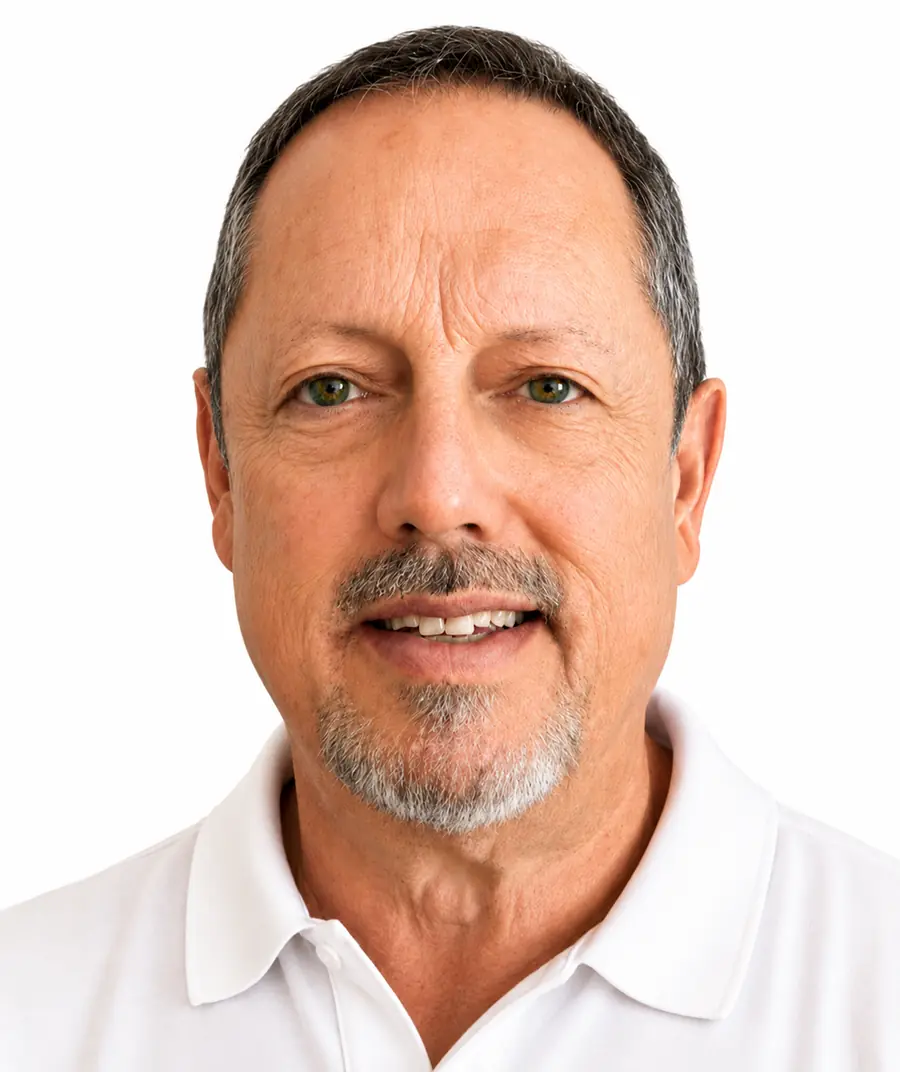
Prof. Jeremy Lewis, PhD FCSP
Consultant Physiotherapist · Professor of Musculoskeletal Research
MSK Sonographer · Independent Prescriber
- He teaches it himself — not a licensed version, not a recording
- 26th edition, after running in over 35 countries
- Hands-on both days — one treatment couch per two to three participants
- Certificate for CPD and for overseas registration portfolios
Reserve your seat — free
Choose your batch and we will confirm your seat and the fee on WhatsApp within one working day. No payment today.
Free to join · No payment today · We reply on WhatsApp within one working day
Prefer to talk? Call +91 93463 31137 — we answer 9am to 8pm
You're on the list.
We'll send the full course programme to your WhatsApp shortly, and message you the moment the course fee and payment details are confirmed — usually the same day.
City
Mumbai
Batch 1
Fri 9 & Sat 10 Oct
Batch 2
Sun 11 & Mon 12 Oct
Venue
Dragonfly Hotel, Andheri East
Registration
Open now
– Why this course, and why now –
Three reasons this does not come around often in India
01
He teaches it himself
Not a licensed version, not a recording. Prof. Lewis is in the room for both days, teaching the course he wrote — now in its 26th edition after running in over 35 countries.
02
A working room, not a lecture hall
The format is built around one treatment couch for every two to three participants. You are assessed, corrected and coached by hand across both days — not watching a demonstration from row twelve.
03
It changes how you think, not just what you do
The reason participants describe it as career-changing is not a new technique. It is a different way of reasoning about shoulder pain — one you can apply to every other region too.
– Your teacher –
Prof. Jeremy Lewis
PhD, FCSP · Consultant Physiotherapist
Professor of Musculoskeletal Research
MSK Sonographer · Independent Prescriber
Internationally recognised clinician, researcher, author and educator in shoulder rehabilitation — and among the very few who both generate the evidence and treat patients with it. He works clinically in the UK National Health Service, holds a professorship in musculoskeletal research, and has been awarded a Fellowship of the Chartered Society of Physiotherapy — the Society's highest honour. He assesses and treats people with complex shoulder problems.
He trained additionally as an MSK sonographer and performs ultrasound-guided shoulder injections as part of rehabilitation where they are appropriate. That matters for this course: the sessions on imaging and on injections come from someone who does both, rather than someone who has read about them.
What his research changed
The Shoulder Symptom Modification Procedure gave clinicians a way to test change in real time during assessment rather than label tissue. His work on rotator cuff related shoulder pain reframed a family of separate diagnoses as one multi-factorial presentation — which is now how much of the profession talks about it.
What he argues against
He has published critically on the influence of posture and muscle imbalance in shoulder conditions, on the case for surgery in subacromial pain, and on the over-medicalising of normal musculoskeletal ageing. Expect the course to challenge things you were taught.
Teaching and academic work
He has taught shoulder workshops internationally and is regularly invited to give keynote lectures at international conferences. Alongside his own research he supervises PhD and MSc students, and is a Viewpoint editor for JOSPT.
Published work
Co-editor and author for Grieve's Modern Musculoskeletal Physiotherapy (4th edition), and co-editor with César Fernández-de-las-Peñas of the textbook The Shoulder: Theory and Practice — the book this course takes its name from.
Qualifications
- Bachelor of Applied Science (Physiotherapy)
- Master of Science (Manipulative Therapy)
- Postgraduate Diploma in Musculoskeletal Physiotherapy
- Postgraduate Diploma in Sports Physiotherapy
- Postgraduate Diploma in Biomechanics
- Postgraduate Certificate in Diagnostic Imaging (Ultrasound)
- Injection Therapy
- PhD
- Independent (non-medical) Prescriber
26th
Edition of this course
35+
Countries taught in
FCSP
Highest CSP honour
24
Places in Mumbai

– The course and the textbook –
The Shoulder: Theory and Practice
This course shares its name with the textbook, and the same thinking runs through both — the shoulder as part of a whole moving person, not an isolated joint.
Edited by Prof. Jeremy Lewis and Prof. César Fernández-de-las-Peñas, with forewords by Wilbour Kelsick, Clare L Ardern and Karim Khan, the book gathers the evidence base the course is built on.
You do not need to have read it to attend. But if you want to know the depth this course works at before you commit two days to it, the contents page is a fair preview.
– What you will be able to do differently –
Monday morning, back in your clinic
The course is not a technique catalogue. It is a way of reasoning that holds up when a patient does not fit the textbook.
- Stage a rotator cuff presentation instead of labelling it, and know what that changes about treatment
- Use symptom modification as a live assessment tool rather than a fixed protocol
- Separate shoulder pain from referred cervical and thoracic sources with confidence
- Explain to a patient why their scan result may not be the reason they hurt
- Prescribe and progress shoulder exercise with a reason behind every parameter
- Decide when imaging or an injection genuinely changes your plan — and when it adds nothing
- Complete a physical examination in five minutes without losing information

– The full two days –
Course details
Programme, session by session
Published in full because clinicians deciding whether to close their clinic for two days deserve to see exactly what those two days contain.
Day one 09:00 – 18:00
08:30
Registration
09:00
Introduction — reframing musculoskeletal practice
- The global burden of musculoskeletal disability
- Risk factors for developing shoulder pain — what can and cannot be modified
- Why doesn't everybody respond the same way? Biopsychosocial and lifestyle factors
- Social determinants of health, and health literacy in practice
- The power of language — how words heal and harm
- Patient education at the forefront of management, in the patient's own learning style
- Healthcare sustainability and what best practice actually costs
10:30
Refreshments
10:45
Function, biomechanics and the kinetic chain Practical
- Why regional and whole-body kinematics, biomechanics and ergonomics decide shoulder outcomes
- Why do humans throw?
- Practical: lower limb and trunk assessment to maximise upper limb function
12:00
Assessment
- A biopsychosocial approach that supports clinical reasoning and shared decision-making
- How to construct and direct an empathetic patient interview — maximising both the therapeutic relationship and the information you collect
- The dilemma of diagnosis, and the alternatives to it
- In-depth discussion of orthopaedic special tests, posture and imaging
12:30
Lunch
13:15
Assessment, continued Practical
- Minimising the physical examination to five minutes
- A new way to assess muscle performance
14:45
Rehabilitation without addressing lifestyle factors — are we kidding ourselves?
- A deep but comprehensible dive into cell physiology, and how lifestyle factors help or harm clinical outcomes
- The biochemical case for including exercise in rehabilitation — and why exercise alone will never be enough
- How to assess lifestyle factors, and the behavioural change cycle
15:30
Refreshments
15:45
Injections, medicines and supplements
- The good, the bad, and the useless
16:15
Rotator cuff related shoulder pain (#RCRSP)
- What's in a name? A detailed review of this multi-factorial problem
- Current evidence across professions on aetiology and pathology, presented in depth
- A critical comparison of surgical and non-surgical outcomes
18:00
Wrap up and finish
Day two 09:00 – 17:00
09:00
Review, questions and discussion — evidence-based practice, putting day one together
09:30
Shape-Up-My-Shoulder (#SUMS) rehabilitation programme Theory + practical
- A three-stage rehabilitation programme applicable to the majority of musculoskeletal shoulder presentations
- Weaving an interactive educational programme through the rehabilitation itself
- Identifying a safe entry point — otherwise known as not running a marathon on day one
- How to progress the programme effectively, and pain education to guide the patient through it
- Hands-on or hands-off?
- Stage I — early rehabilitation, including the Shoulder Symptom Modification Procedure
- Stage II — muscle performance · Stage III — function
- Building a weekly programme, and transitioning to hard, high-end and "chaotic" rehabilitation
- #SUMS for massive inoperable rotator cuff tears and cuff arthropathy — what the evidence says, and how surgery, immobilisation and rehabilitation compare with rehabilitation alone
Breaks
Refreshments 10:30 · Lunch 12:30 – 13:15 · Refreshments 15:00
15:15
Virtual reality — is seeing believing, and achieving?
- The role of VR and mixed reality in shoulder rehabilitation
- The evidence, and the practical application
15:45
Transitioning to self-management
- What happens after formal rehabilitation ends
- The transition to 3,600 MET minutes per week — why it is essential, how to calculate it, and how patients actually achieve it
16:15
Questions, discussion, and wrapping it all up
The order of the programme, its content and the timetable structure may vary. Proceeds from this course support an international research programme.
Bonus learning: frozen shoulder — included after the course
The two days do not end when you leave the room. A bonus theory and practical training session on frozen shoulder is released to participants at the conclusion of the course, and stays available for four weeks — long enough to work through it properly and revisit the techniques with real patients in front of you.
What the bonus module includes
- In-depth theory on frozen shoulder and the history of the condition
- How the condition should be assessed
- The evidence for management approaches
- Injection therapy — the use of it, and the types
- Practical assessment and management techniques, as integrated videos
- Available for four weeks after the course ends
Fees, registration & payment
Reserving a seat takes a minute and costs nothing. Tell us which batch you want and we confirm your seat and the fee on WhatsApp within one working day. Payment is made after that, within a stated window, to hold the seat.
Early bird rate
Confirmed on registration
For registrations completed before the early bird deadline. A further reduction applies to group bookings of two or more participants from the same clinic, department or college.
Standard rate
Confirmed on registration
Applies after the early bird deadline, until registration closes or the batch is full — whichever comes first.
The course fee includes
- Two-day practical, in-person workshop taught by Prof. Jeremy Lewis
- Course manual
- Catering across both days
- Certificate of attendance, usable as CPD evidence
- The frozen shoulder bonus module, available for four weeks afterwards
Group bookings
Clinics, hospital departments and colleges receive a group rate, and GST invoicing is available. A single transaction is required for all participants in a group, with individual registration details emailed afterwards. Call +91 93463 31137 for a quote.
Payment
Registration payments are by bank transfer. Early bird and standard registrations may be paid by bank transfer, UPI or card. Confirmation is issued once payment and registration details are both complete.
– Learn. Question. Think. Apply. –
Why attend, and who it is for
An intensive two-day face-to-face programme exploring contemporary, evidence-informed approaches to the assessment and management of shoulder conditions — built to develop your clinical reasoning, challenge traditional approaches, and translate current evidence into everyday practice.
Why attend
- Two full days of face-to-face learning
- Evidence-informed shoulder assessment and rehabilitation
- Clinical reasoning and practical application
- Learn directly from Prof. Jeremy Lewis
- Professional interaction and discussion throughout
- A rare opportunity to attend his face-to-face teaching in India
Who should attend
- Physiotherapists
- MSK clinicians
- Sports physiotherapists
- Rehabilitation professionals
- Clinicians with a special interest in shoulder conditions
- Postgraduate students and educators
The practical work assumes you can perform a basic shoulder examination. Everything beyond that is taught from the ground up.
What to bring
Clothing you can be assessed and treated in — practical sessions work in pairs and small groups. A notepad or laptop if you like, though a printed course manual is provided. Nothing else: all treatment couches, weights, balls and mobilisation belts are supplied.
– Learning outcomes –
What you will take back to your clinic
01
A better understanding of the clinical anatomy and biomechanics of the shoulder region
02
An appreciation of why a biopsychosocial approach to patient management matters
03
A comprehensive interview and physical evaluation strategy that accounts for local and referred sources of pain, and directs you to an appropriate management plan
04
Greater confidence in physically assessing the shoulder, and a clearer understanding of the evidence behind the techniques you choose
05
Deeper knowledge of the various pathologies of the shoulder girdle
06
Greater competency managing patients across a range of shoulder pathologies
07
A review of the research on posture and muscle imbalance, and what it really shows about shoulder pathology
08
The evidence underpinning assessment and management of rotator cuff related shoulder pain and frozen shoulder
09
A clear view of the evidence on diagnostic imaging in musculoskeletal shoulder disorders
10
The same for injections — where they belong in management, and where they do not
11
Greater confidence using exercise therapy and other techniques, and the ability to evaluate whether they worked
Two batches · Choose your dates
Two dates. Pick the one that fits your clinic.
Batch 1 runs Friday 9 and Saturday 10 October. Batch 2 runs Sunday 11 and Monday 12 October. Identical course, identical certificate — reserving takes under a minute. Early registration is strongly recommended due to limited availability.
Reserve my seat — freeor call +91 93463 31137 · WhatsApp us
– One decision left –
Pick your two days
The identical course runs twice — same programme, same teaching, same certificate. Choose the pair of days that works around your clinic, and we hold your seat while you confirm.
Both batches include
- Two full days taught in person by Prof. Jeremy Lewis
- Every practical session, with hands-on correction
- Printed course manual and catering across both days
- Certificate of attendance for CPD and overseas registration portfolios
- The frozen shoulder bonus module, available for four weeks afterwards
– From previous editions –
What participants say afterwards
Before I did this course the world was flat!
Complete change to the way I think about shoulders. Best course I have ever done.
The shoulder provides the topic, but the clinical processing could be applied elsewhere.
Excellent rationale for phased rehabilitation.
By far the most informative, research based and thought-provoking course I have been on.
Up to date research, excellent techniques, enlightening, holistic.
Participant feedback from previous editions of the course, taught internationally.
– The people behind the practical work –
London Shoulder Clinic Certified Tutors
Prof. Lewis certifies a network of Indian physiotherapists to teach this course, and continues to assess their standard. They support the practical sessions in the room, which is what makes the hands-on ratio possible — and it is why this course can run in India at all.
Between them they have trained and practised across Hyderabad, Bengaluru, Mumbai, Pune, Delhi, Chennai and Kolkata, in hospital departments, sports teams, private clinics and physiotherapy colleges.
 Dr. Pruthviraj R.
 Dr. Zubair Khan
 Dr. Yogesh Mandhyan
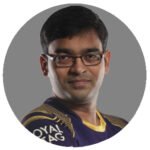 Dr. K. Kamlesh Jain
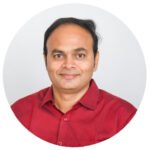 Dr. N. Venu Gopal Reddy
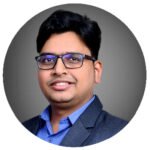 Dr. Shekhar Jambure
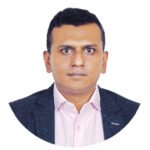 Dr. S. M. Zahidul Islam
 Dr. Rahul Chaudhari
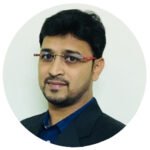 Dr. Nagasumanth Gonabhavi
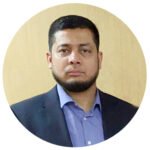 Dr. Safdar Ali Syed
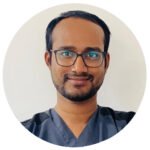 Dr. D. Sudheer Reddy
 Dr. Gaurav Ramesh Bhirud
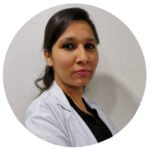 Dr. Hameeda Dharani
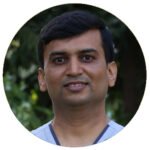 Dr. Harish L Varsani
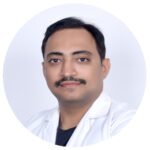 Dr. Harish Tahiliani
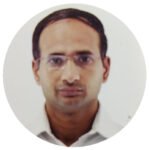 Dr. Ketan P. Pandya
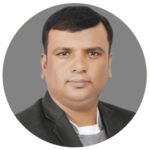 Dr. Omkar Mulik
 Dr. Parthav Patel
 Dr. Polisetty Sandeep Kumar
 Dr. Roshna Meraj
 Dr. Saurabh Mathur
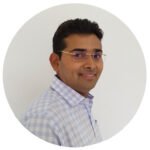 Dr. Varun Pratap Singh
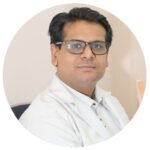 Dr. Veenu Kumar
Tap any tutor to read their full profile on prosperphysio.in. Want this course in your city next? Call +91 93463 31137 or message us on WhatsApp.
– Everything, answered –
Questions we are getting
Is Prof. Lewis teaching this himself, or is it a licensed version?
He teaches it himself, in person, for both days. This is his own course — The Shoulder: Theory & Practice, now in its 26th edition. Prosper Physio Overseas is the host organiser in India, which means we are responsible for the venue, the equipment the practical sessions require, catering, and your registration. The teaching is his.
When exactly is the course, and where in Mumbai?
The course runs twice, so you can pick the pair of days that suits you. Batch 1 is Friday 9 and Saturday 10 October 2026. Batch 2 is Sunday 11 and Monday 12 October 2026. Both run 09:00 to 18:00 on day one and 09:00 to 17:00 on day two.
The venue is Dragonfly Hotel — The Art Hotel, CTS No. 69 & 72, New Link Road, near JB Nagar, opposite Solitaire Corporate Park, Chakala, Andheri East, Mumbai 400093 — close to the airport and well connected for anyone travelling in. Open in Google Maps.
What does it cost?
We confirm the fee to you directly when we confirm your seat, on WhatsApp within one working day. There is an early bird rate and a standard rate, and group bookings of two or more from the same clinic, department or college get a further reduction.
What the fee includes is already fixed: the two-day in-person workshop taught by Prof. Lewis, a printed course manual, catering across both days, a certificate of attendance, and the frozen shoulder bonus module afterwards.
Do I have to pay anything to reserve your seat?
No. Joining is free, takes under a minute, and does not confirm a place. Once the course reaches the minimum number of participants needed to proceed, list members are invited to pay within a stated window to secure their place. Places not paid for within that window are released to the early bird pool.
There are two sets of dates — which one do I pick?
The identical course runs twice, so you can choose whichever pair of days suits your clinic. Batch 1 is Friday 9 and Saturday 10 October 2026. Batch 2 is Sunday 11 and Monday 12 October 2026. Same content, same teaching, same certificate — just different days.
Most clinicians in private practice find the Friday–Saturday batch easier; hospital staff often prefer Sunday–Monday. Tell us your preference on the form and we will confirm your seat in that batch.
Is it mostly theory, or mostly practical?
Both, deliberately interwoven rather than separated into lecture days and practical days. Day one moves between the evidence and practical work on the kinetic chain, assessment and muscle performance. Day two is given largely to the Shape-Up-My-Shoulder rehabilitation programme, taught as theory and practice together, plus frozen shoulder.
Wear clothing you can be assessed and treated in. You will be working in pairs and small groups.
What is the frozen shoulder bonus module?
A theory and practical training session released to participants at the conclusion of the course. It covers the history of the condition, how it should be assessed, and the evidence for its management, including the use and types of injection therapy. Practical assessment and management techniques are presented as integrated videos.
It stays available for four weeks after the course ends — long enough to work through it properly and try the techniques with real patients.
Is this suitable for students, or do I need years of experience?
Final-year BPT students, interns and MPT students attend these courses regularly and get a great deal from them. The practical work assumes you can perform a basic shoulder examination; everything beyond that is taught from the ground up.
At the other end, senior clinicians and clinic owners attend too — and many people attend more than once, because the content is continually updated as the evidence moves.
Do I get a certificate, and does it count for CPD?
Yes. A certificate of attendance is issued on completion. It serves as CPD evidence for Indian practice, and it can be included in overseas registration portfolios — HCPC for the UK, CORU for Ireland, AHPRA for Australia. Our registration team works with those portfolios daily, so if you want the certificate framed for a specific application, tell us and we will advise.
What if I cannot travel to Mumbai?
This course is taught face to face only. There is no online version of it. The practical work — being assessed and corrected by hand, on a couch, with Prof. Lewis in the room — is the whole point of the two days, and it cannot be delivered remotely.
If neither pair of dates works for you, register your interest anyway. You will be the first to hear when the next Indian edition is scheduled.
Can my clinic, hospital department or college book a group?
Yes, and group bookings get a better rate at every pricing tier. GST invoicing is available. A single transaction is required for all participants in a group, with the individual registration details sent to us afterwards.
Call +91 93463 31137 and ask for a group quote rather than filling in the form — it is faster, and we can hold places while you confirm numbers internally.
Do I need to bring any equipment?
No. Treatment couches with pillows and towels, exercise mats, tennis balls, weighted balls, hand weights, Swiss balls and mobilisation belts are all supplied by us as host organiser. Bring clothing you can be assessed in, and a notepad if you like — though a printed manual is provided.
Who is Prosper Physio Overseas, and why are you hosting this?
We are a physiotherapy-only practice operating since 2016, based in Hyderabad. Alongside hosting international courses in India, we guide Indian physiotherapists through overseas registration, jobs and study.
Dr. Safdar Ali Syed — an advanced physiotherapy practitioner and MSK sonographer in the UK National Health Service — negotiated this course into India directly with Prof. Lewis. The reason we host it is straightforward: this course costs several times more to attend internationally, before flights and accommodation.
How will you contact me after I join the list?
On WhatsApp, within one working day, with the full course programme. After that you will hear from us with the course fee and payment details. We do not pass your number to anyone else, and you can ask to be removed from the list at any time.
– Registration –
Confirmed for October. Reserve your seat.
Prof. Lewis teaches the course twice in Mumbai this October, so you can choose the pair of days that works around your clinic. Tell us which batch you want and we will confirm your seat and send the fee details on WhatsApp within one working day.
- Batch 1: Friday 9 & Saturday 10 October 2026
- Batch 2: Sunday 11 & Monday 12 October 2026
- The lowest available price opens to the list before anyone else
- Your choice of batch, held for you while you confirm
- Early registration is strongly recommended due to limited availability
- The full two-day programme sent to you now, so you can decide before you commit
Booking for your clinic, department or college? Group rates and GST invoicing are available. Call +91 93463 31137 and ask for a group quote rather than using the form.
Reserve your seat — free
No payment today. Takes under a minute.
Free to join · No payment today · We reply on WhatsApp within one working day
Prefer to talk? Call +91 93463 31137 — we answer 9am to 8pm
You're on the list.
We'll send the full course programme to your WhatsApp shortly, and message you the moment the course fee and payment details are confirmed — usually the same day.